
Hudson Lab Automation and Ramona Optics (“Ramona”) have joined forces to bring walk-away live-cell imaging to life. By integrating Hudson’s robotics and SoftLinx® scheduling software with Ramona’s groundbreaking multi-camera imaging technology, researchers can now capture continuous, high-resolution data with less manual intervention, accelerating discovery in cell biology, drug development, and behavioral research.
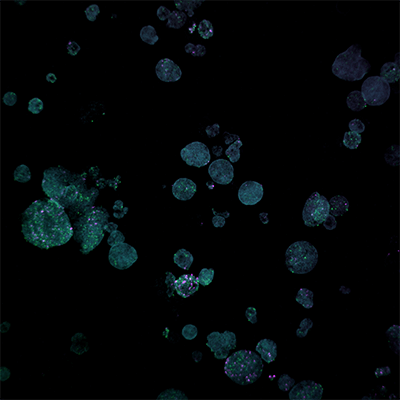
Figure 1. Human Intestinal Organoids in 4 Fluorescent Channels
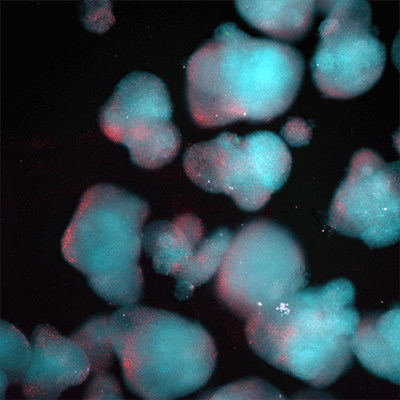
Figure 2 Human Kidney Organoids in 4 Fluorescent Channels
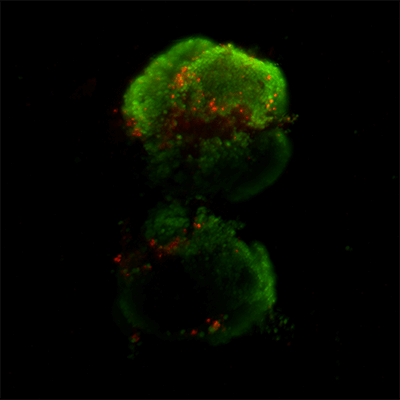
Figure 3. Human Neurovascular Units in Red and Green Fluorescence
Seeing More, Faster: What Sets Ramona Apart
Ramona has developed an entirely new approach to imaging. Their patented Multi-Camera Array Microscope (MCAM
) architecture uses dozens of synchronized cameras to capture gigapixel-scale images in real time. The result: researchers can observe entire multiwell plates, tissues, or small organisms — all at single-cell resolution — without stitching, refocusing, or sacrificing speed.
Their systems, including the Vireo
and Kestrel
microscopes, deliver:
- Massive field of view with cellular detail, enabling imaging of thousands of wells or specimens simultaneously.
- High temporal resolution, ideal for long-term time-lapse and behavioral assays.
- Integrated AI-driven software that handles stitching, analysis, and data compression on the fly.
Across applications ranging from tracking zebrafish behavior and imaging organoids, to monitoring developmental biology or drug responses, Ramona’s technology enables scientists to see more biology, in less time, with fewer manual steps.
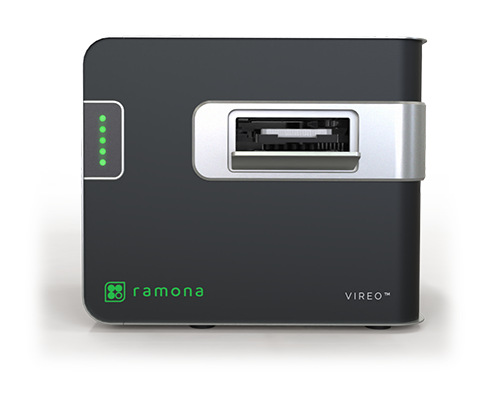
Figure 4. The Vireo
microscope by Ramona — designed for high-throughput, walk-away live-cell imaging.
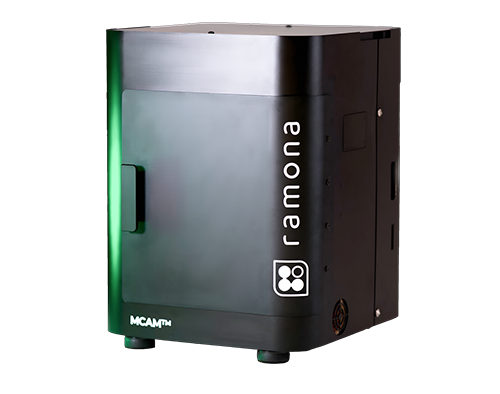
Figure 4B. The Kestrel
the ultimate imaging system for small model organisms.
Automation That Makes It Truly Walk-Away
In our joint integration project, Hudson’s robotic arm and SoftLinx® scheduling software serve as the automation backbone connecting Ramona’s microscopes to the broader laboratory workflow.
With Hudson’s automation, the system can:
- Automatically load and unload plates to and from Ramona’s imaging systems.
- Coordinate with incubation, dispensing, and labeling instruments to keep assays running seamlessly.
Together, this transforms Ramona’s imaging systems into fully automated workcells capable of running 24/7 — a milestone in high-throughput, live-cell imaging.
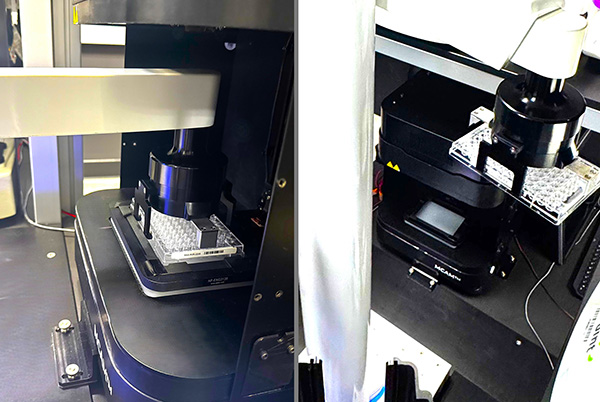
Figure 5. The Hudson robotic arm (SciClops) loading a Ramona live-cell imaging device.
“We were impressed by Hudson’s ability to integrate seamlessly with the Kestrel MCAM — this collaboration marks a huge milestone for both teams. The automation expertise they brought made walk-away live-cell imaging a reality.”
Mark Harfouche, Co-Founder, Ramona.
Accelerating Cutting-Edge Research
“Our mission at Hudson is to automate the world’s most innovative scientific workflows. Collaborations like this with Ramona accelerate cutting-edge research and help scientists spend more time on discovery, not routine tasks.”
This collaboration reflects a shared vision: enabling science through smarter systems that bridge the gap between technology and discovery.
The post Automating Discovery: How Hudson and Ramona Optics Are Enabling Walk-Away Live-Cell Imaging appeared first on Hudson Lab Automation.
发布者:heath thomas,转转请注明出处:https://robotalks.cn/automating-discovery-how-hudson-and-ramona-optics-are-enabling-walk-away-live-cell-imaging/
